

Letters from the Unkillable one
on the artist, the monster, and what it means to refuse the standard tuning


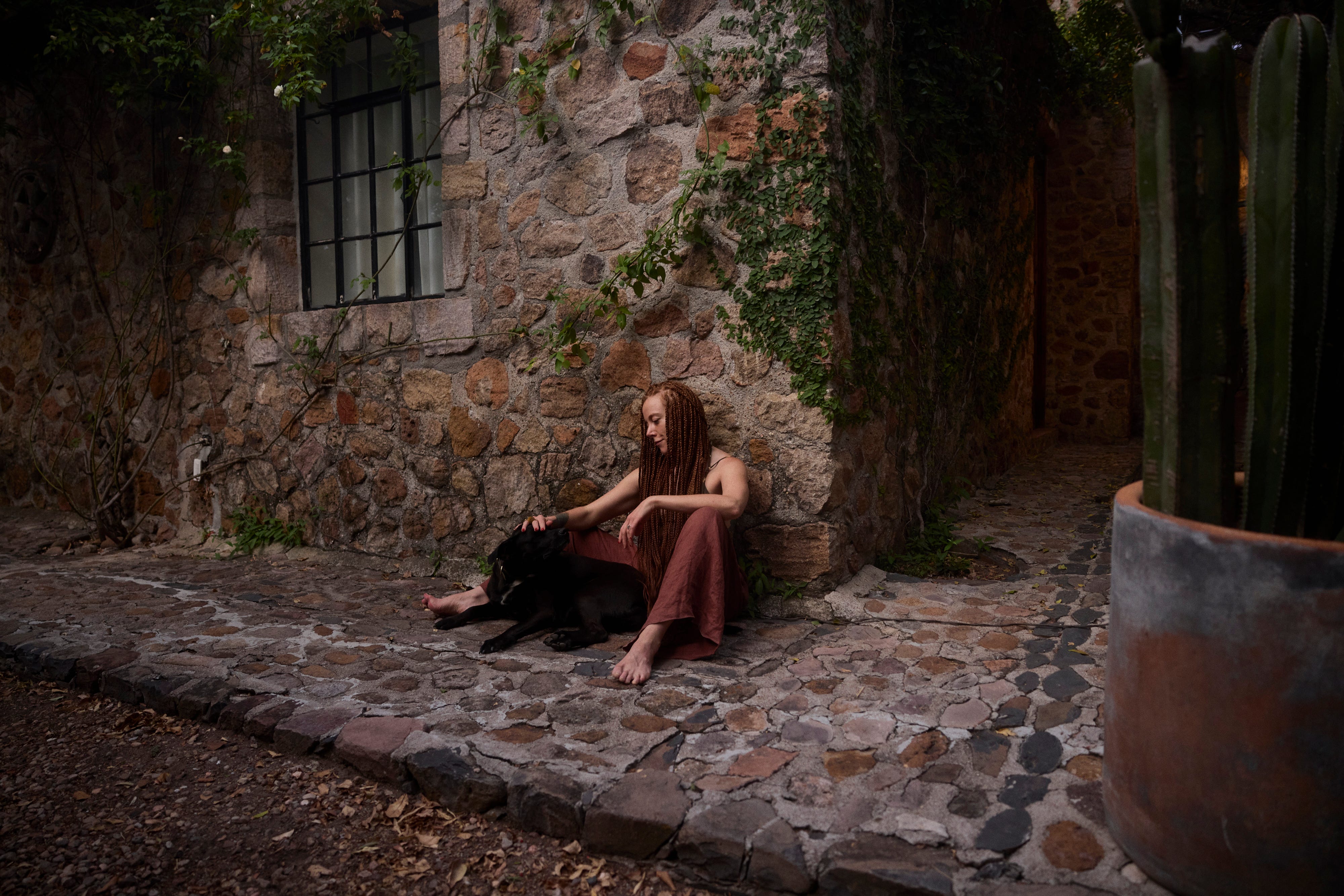
Hi fam, if you're reading this on the Future Sound of Nature substack — welcome. This is Lola, co-founder of FSON. <3 This piece also lives on my Substack, A Postcard from Somewhere (else), where I write about sound, ecology, the erotic philosophy of making art, and whatever the landscape is currently teaching me. If this finds you, consider subscribbing — it's where the longer dispatches live.
This week is my birthday. I'll be brutally honest, part of me wants to lean into it, the cake, the dance, all of it. And another part just wants to go quiet. Become temporarily unavailable, OOO. Let the day pass through me instead of the other way around.
Birthdays, I’ve come to realize, at a certain point, stop being about the cake and start being about the reckoning. You sit with the year that passed through you (not the one you moved through, but the one that moved through you) and you take inventory of what’s still standing. What composted. What surprised you by surviving. What you finally let die.
I’m writing this from that place. The liminal, the edge, the slightly dizzy threshold of another trip around the sun. Another spiral in reverse completed (not a line, it’s never been a line, remember?).
I was listening to Joni Mitchell, and remembered something so profound about her work and the way it refused to play by the rules…
ON REFUSING THE STANDARD TUNING
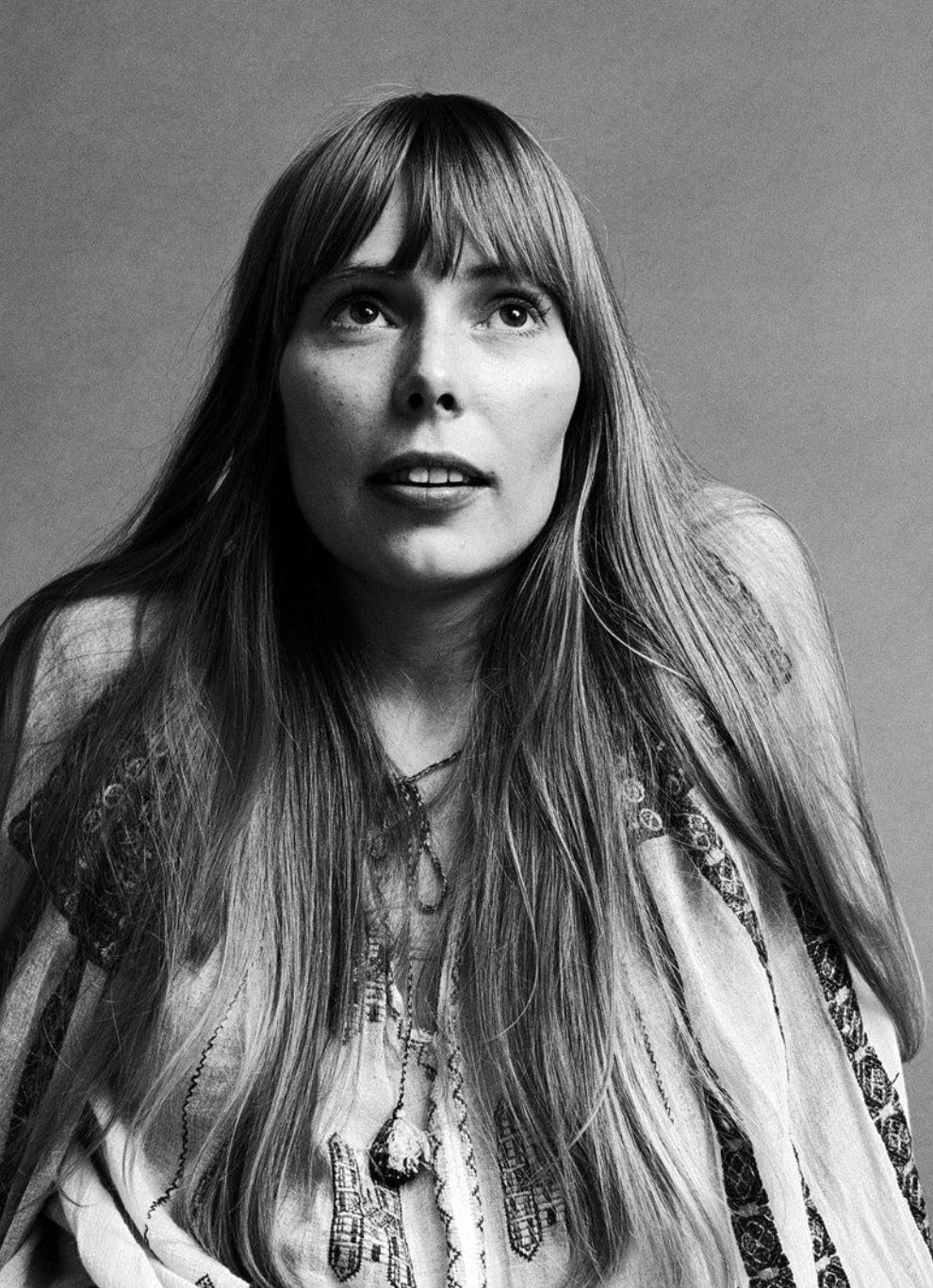
Joni Mitchell tuned her guitar differently for almost every song she ever wrote — I’m talking over 50 different tunings across her career — because standard tuning couldn’t make the sounds she was hearing in her head.
Sigh.
“Standard” tuning couldn’t make the sounds she was hearing in her head.
The “normal” was not in service of what she wanted to convey.
The thing everyone else accepted as a “given” — the foundation itself — was just a starting point for her to move past above and beyond. She didn’t want to mould her voice to the “normal,” she didn’t fight the standard. She simply left it behind, quietly, in pursuit of what was actually trying to come through.
She said: “Freedom to me is a luxury of being able to follow the path of the heart, to keep the magic in your life. Freedom is necessary for me in order to create, and if I cannot create I don’t feel alive.”
And this: “I heard someone from the music business saying they are no longer looking for talent, they want people with a certain look and willingness to cooperate. I thought, that’s interesting, because I believe a total unwillingness to cooperate is what is necessary to be an artist... not for perverse reasons, but to protect your vision.”
A total unwillingness to cooperate.
unwillingness to cooperate.
I’m letting that sink in for a sec.
The world as we now know it: the systems, the platforms, the whole sensorium of capitalism and its rewards, runs on cooperation. On palatability. On agreeability. On being legible to the machine. On “staying in your lane.”
And, meanwhile the artist, the real one, the unkillable one, keeps detuning, keeps “messing things up”. Keeps moving to a frequency the machine hasn’t been able to monetize yet. Keeps making something that cannot be fully captured.
Which, maybe, makes the artist something like a monster.
Bear with me here. This gets good.
“Freedom to me is a luxury of being able to follow the path of the heart, to keep the magic in your life. Freedom is necessary for me in order to create, and if I cannot create I don’t feel alive.” - Joni Mitchell
WE ARE LIVING IN THE TIME OF THE MONSTROUS
Bayo Akomolafe writes that “we are in the time of monsters, mostly because monsters are embodiments of the magical between.” The monster, in this framing, is what cannot be fully represented. It cannot be tuned, tamed, categorized. It slips through the grid of classification. What the status quo cannot contain.
The artist doesn’t escape the contamination. The artist metabolizes it. Transforms it. Makes it speakable, tangible, something to feel, to absorb.
Moor Mother (Camae Ayewa), whose entire musical practice is built on making legible the violence that’s been normalized — who releases albums like Black Encyclopedia of the Air and Jazz Codes precisely because she understands that the archive of what’s been lost, suppressed, and disappeared is itself a form of power, she spends her whole creative life trying to undo normative aesthetics and social principles to imagine new histories. New futures.
Techno, House, 808s breaking classical forms of drum patterns. Haitian drum circles, candomblé, guaguancó, currulao, el abozao and la juga are all musical movements built at the edge of violence and transmuted into bliss, into liberation. Dance, rhythm as a political statement. As breaking the lane. New futures, new realities. the dancefloor as political statement.
Which brings me back to birthdays. And rites of passage. And what it actually means to make art.
THE MASTERPIECE IS YOU
Making art is how I metabolize what I cannot see with my eyes. Every time I create, there’s a possibility moving underneath. The work was never the song, the mix, the essay. The work was the choosing, a kind of belief — again and again, in the dark, with no roadmap and no guarantee — to trust that what needed to emerge would find its way through you.
That self. The one who kept showing up. The one who refused to go quiet.
That’s the whole thing. Everything else is documentation.
Octavia Butler understood this in her bones. She wrote: “First, forget inspiration. Habit is more dependable. Habit will sustain you whether you’re inspired or not. Habit is persistence in practice.” She was rejected repeatedly before anyone called her a genius. She made the work anyway. In the dark. In the standard-tuning world. With her own frequency.
And this is what Bayo means when he talks about response-ability — not reacting, but responding. Not the frenzy, but the dance. “Could becoming response-able be less about certainty and more about a dance, a series of ecstatic serenades and tunes to the all-encompassing notions of our entangled reality, including the brutal, the dark, the out of tune, the merciless, the toxic. All of it.”
All of it.
A-l-l-o-f-i-t.
Because the world is not fully “story-able”. The world doesn’t want to be storied, it’s sassy like that. Like the moon never wanting to be photographed fully.
Some things cannot be rendered visible, cannot be rationalized or finally articulated. That isn’t even “the point.”
As Bayo writes: we are large and sprawling in our vastness, moving through a world of partial traces where things will never be fully justified.
I would rather live in a universe I cannot explain than in one that has been finally articulated, compartmentalised, told to be tamed, to act nicely. Because wonder is what moves me. Incompleteness is not the problem — incompleteness is the condition of being alive. <3
The standard tuning is the lie that things should resolve. That there’s only one way to continue, to be in the world. This couldn’t be more further from the truth.
I believe a total unwillingness to cooperate is what is necessary to be an artist... not for perverse reasons, but to protect your vision.” — Joni. Mitchell
WHAT I KNOW ON THIS BIRTHDAY
I know that I am ecological, that I contain ontologies, geographies and so does the world. I am the gut bacteria in my belly, the wood of my coffee table, the smell of freshly cut grass, the volcanic memory in the lava tube I recorded in Hawaiʻi last March, the mycelium network that keeps sending signals between bodies.
I know that the grief I carry — personal, ecological, ancestral — is not something to fix. As Bayo writes: “Grief is a public affair, not a private event. It breaks down the neoliberal boundaries of selfhood.” Grief as choreography. As exchange. As traveling alongside.
I know that endings don’t close — they tunnel deeper. That what feels like death is just the doorway contracting before it turns into what longs to be born.
I know that the monster I’ve been afraid of being — too strange, too multiple, too unwilling to cooperate, too loud, too much, too this, too that — is maybe exactly what’s needed. The exposition of what the normative is doing to us, quietly, while we call it “normal”.
I know that the artist’s job is not to be legible to the machine. The artist’s job is to keep detuning.
And I know — because you’ve shown me, fam, across timezones and nervous systems, in the messages and the replies and the quiet moments when something I wrote found you at exactly the right time — that making something out of nothing, in the dark, with zero guarantee, is never done alone.
“Luckily there is still company, human and not human.” — Tsing
We can still catch the scent of what wants to emerge.
So. Another year. Another spiral.
To everyone who showed up for it — thank you! To everyone who’s supported my work, through Substack, buying my records, coming to my shows, following my work, thank you. For ever grateful.
And to the unkillable one in you, the one who keeps making something out of nothing, the one who refuses the standard tuning:
Happy birthday to us.
con amor y música, Lola 🌋
And speaking of detuning —
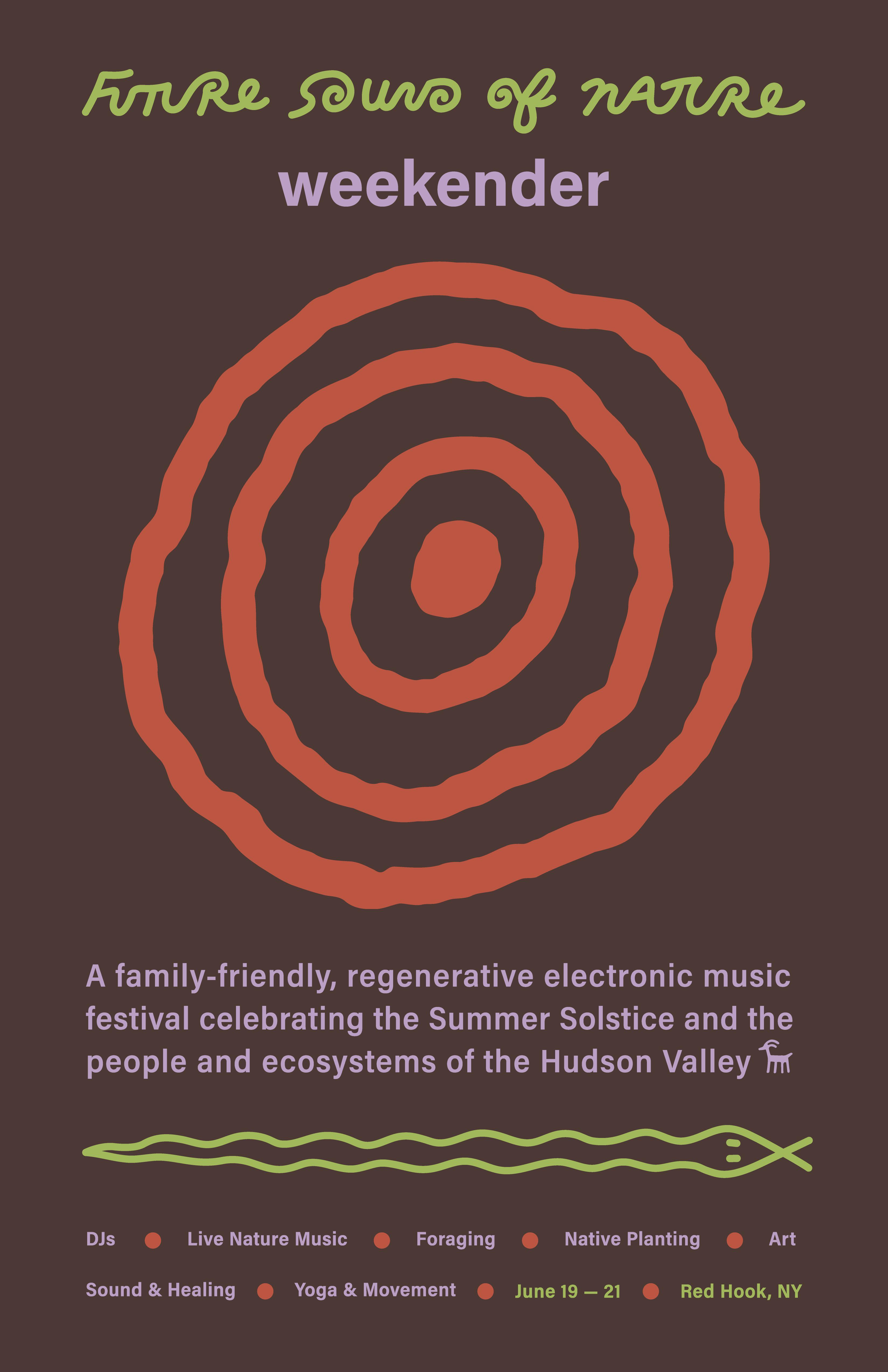
This June 19–21, we’re gathering for our yearly solstice festival. A place to grow roots. To grief together, in community, to find bliss and find solace in electronic music, nature, deep listening, foraging, sound and body. Listening experiences at the intersection of electronic music and the more-than-human world — exploring focused, whole-body engagement with other non-human bodies through sound, dance, ritual, presence.
Come be with us.
🎟 Tickets: Future Sound of Nature 2026
P.S. — If this landed somewhere in your body, consider becoming a paid subscriber. It’s what keeps this space alive and weird and yours. The cost of one coffee a month. All the strange medicine of sound, words, and erotic philosophy.
 | A guest post by
|